The number
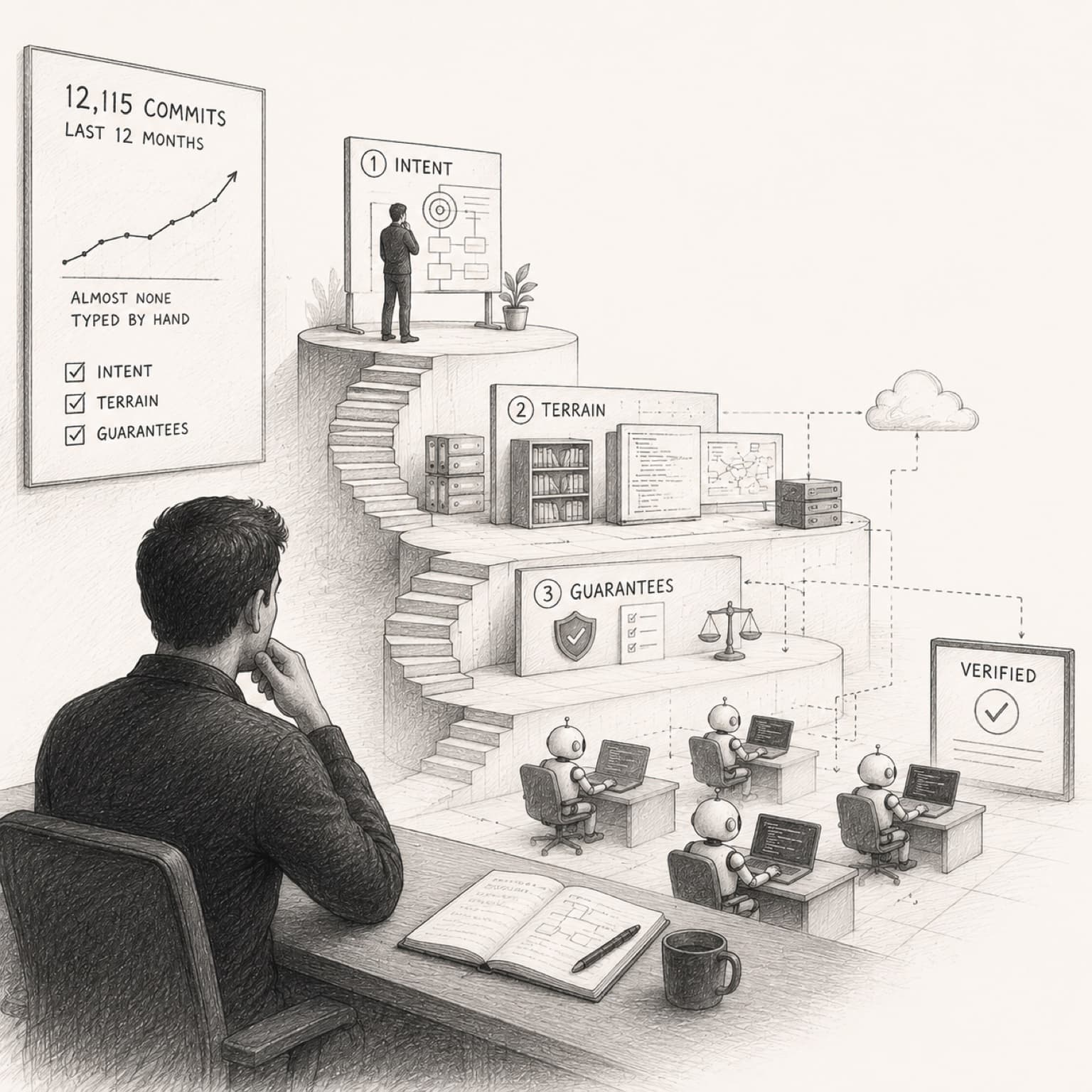
I made 12,115 commits in the last year. No honest definition of programming describes what I did. I did not type most of those lines. Machines executed them, inside systems I run.
There are two ways to read that number. One is that I became very productive. The other is that the word "programmer" no longer describes the job. The second reading is the correct one, and it is worth being precise about what the job became.
The part that should worry me
A year ago my work inside the loop was real. I reviewed every diff. I corrected the machine when it drifted. I supplied the judgment it lacked in the middle of a task. That was the job: human plus machine, with the human as the error corrector.
Every model generation shrinks that job. The agents need my corrections less each month. I watch it happen in my own sessions: interventions that were daily a year ago are now rare, and entire categories of mistakes simply stopped occurring.
By the standard story, this should erode my value. If your job is fixing the machine, better machines are bad news. But my output multiplied instead of collapsing, and watching that happen commit by commit forced me to notice what the job actually was.
Where the loop ends
Look at what the 12,115 commits actually required from me. Almost none of it happened inside the loop, next to the code, correcting the machine token by token.
What they required was three jobs that live around the loop, not in it.
Intent. Someone decides what the loops are for. Agents execute goals with increasing competence, but they do not own the reason the goal exists, the tradeoff it serves, or the moment it should be abandoned. Every large piece of work I shipped this year started as a judgment call no agent asked for.
Terrain. Agents perform at the level of the environment they run on. Documentation written as code. Repositories cataloged. APIs wired so questions have commands. Contracts at the root of every workspace. Building that terrain is not supervision. It is closer to civil engineering, and its returns compound.
Guarantees. A system that acts needs someone who owns what it promises. Explicit rules of conduct, verification against the real world, evidence that survives the person who produced it, gates that no plausible explanation can talk its way past. Trust is not a model property. It is maintained, like a bridge.
None of these are moves in the game. They are the conditions of the game. The player inside the loop was always temporary. The conditions were always the durable part.
Post-agentic, defined
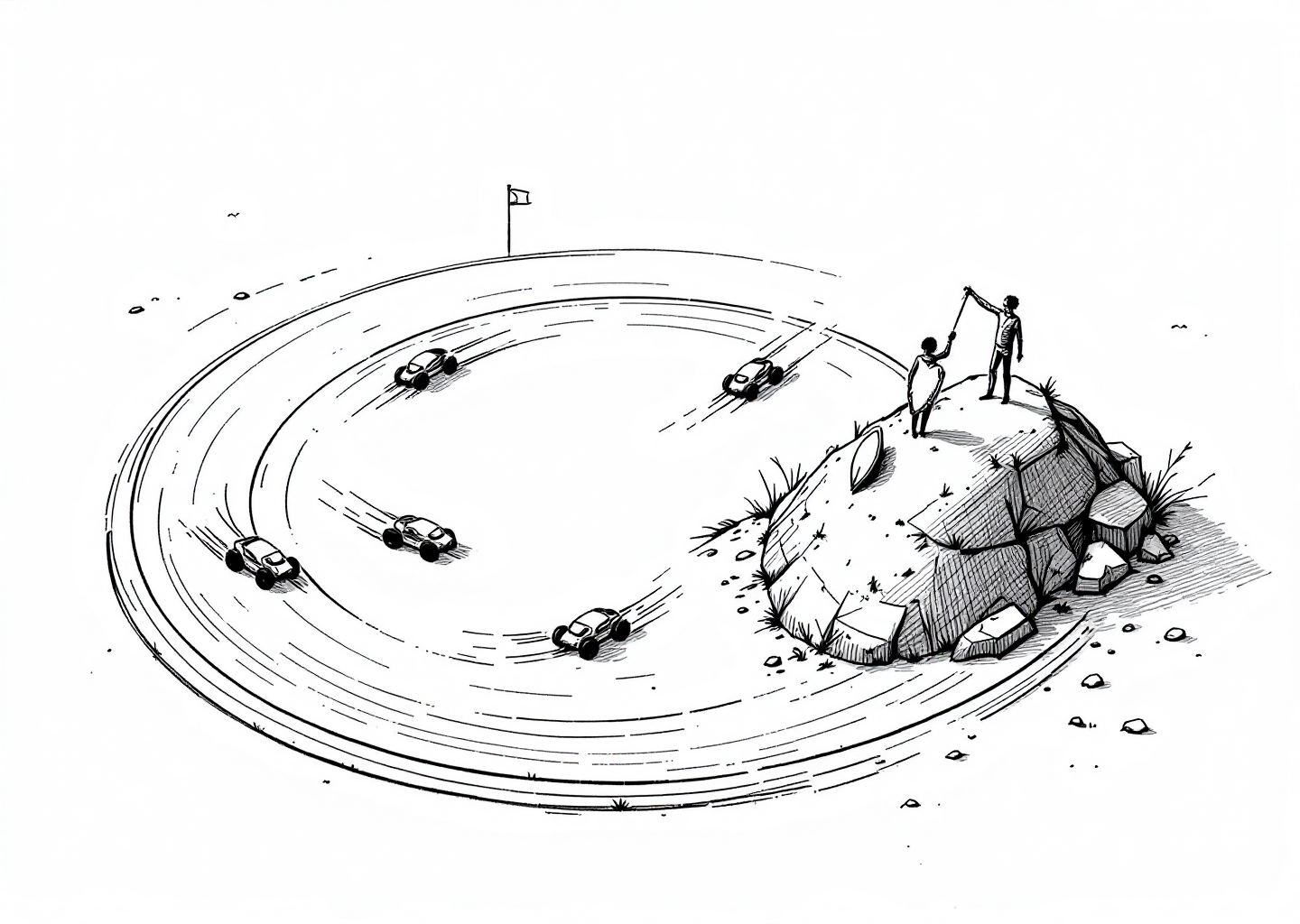
Post-agentic does not mean after agents. Agents are staying, and there will be more of them every year.
It means after the scarcity of agency. For the entire history of software, execution was the bottleneck: hands on keyboards, hours in the day. Everything about how we work, hire, plan, and measure assumes execution is expensive. That assumption just died. When execution becomes abundant, supervision dies with it, because supervision was only ever execution's shadow.
What does not become abundant: knowing what is worth doing, building ground that compounds, and guaranteeing behavior. Those three concentrate. The interesting question about any role in the next decade is not whether an agent can do the tasks. It is what portion of the role was intent, terrain, and guarantees all along.
No comfort, no promise
I will not end with a comforting story. Nothing makes this position permanently human. The layer I work on today will be absorbed like the layers before it, and when that happens the move will be the same one it has always been: go up. The skill that compounds is not any particular layer. It is the practice of building the next one.
That practice has held so far. It can keep holding. Nothing promises it will.