Talisman is an accounting platform from Texas: bookkeeping, month-end close, workpapers, and a client portal for firms that manage many client companies at once.
I joined as an AI engineering contractor. The work that mattered became building a module that did not exist: project management, native to the platform. Work coordination lived outside the product, and accounting work has a specific shape that generic tools handle badly: the same close repeats every month across dozens of companies, and nothing is allowed to fall through.
What shipped
Over three months and roughly 90 commits, end to end. This is the module, with demo data:
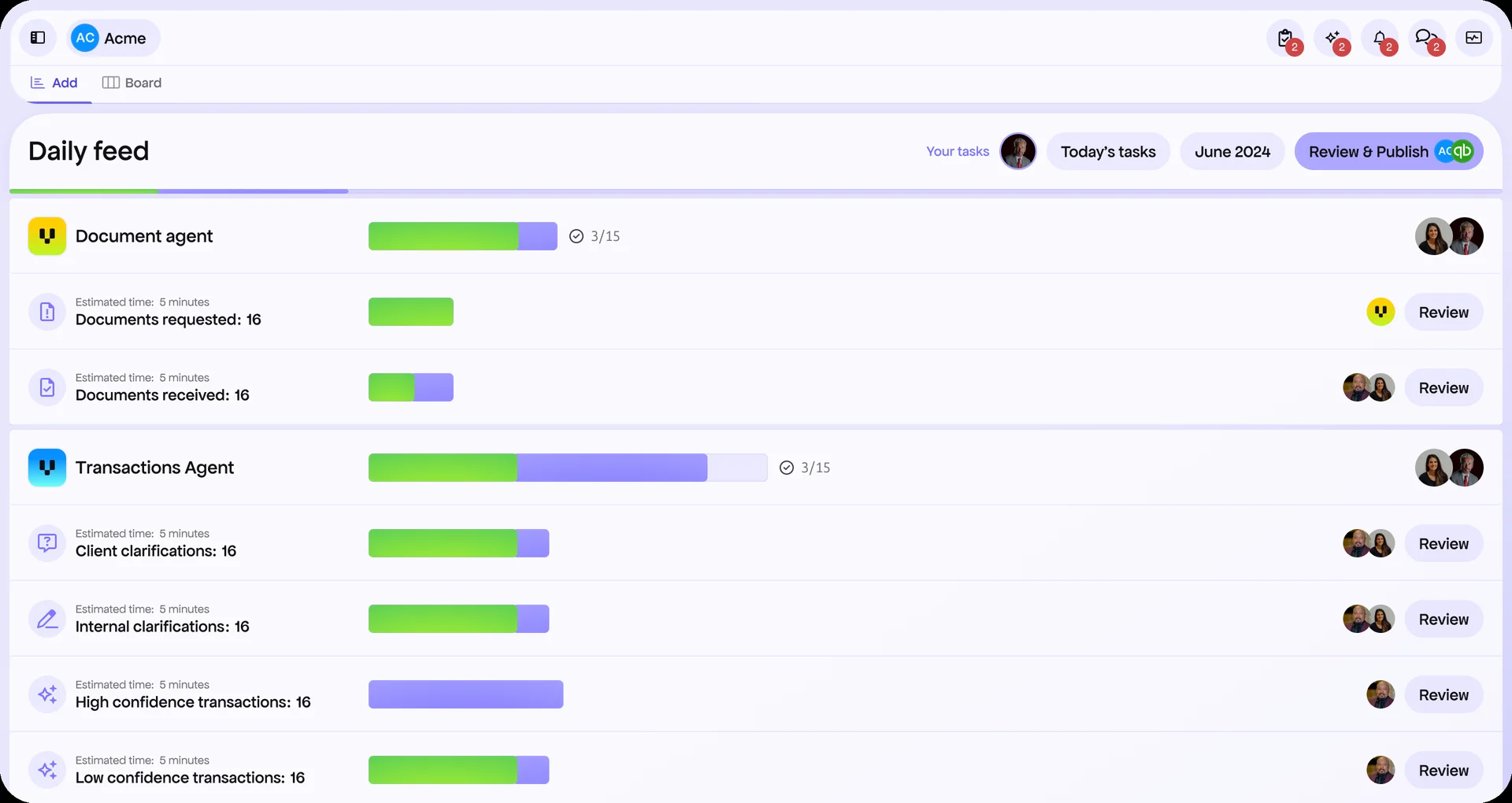
The daily feed is where an accountant starts the day: everything the close needs, grouped and ordered, with progress and a review action on every line. Behind it sit feed, board, calendar, gantt, and workload views on React 19 and Next.js 15, a standardized task detail panel with checklists, services as user-defined categories, and task templates with versioning.
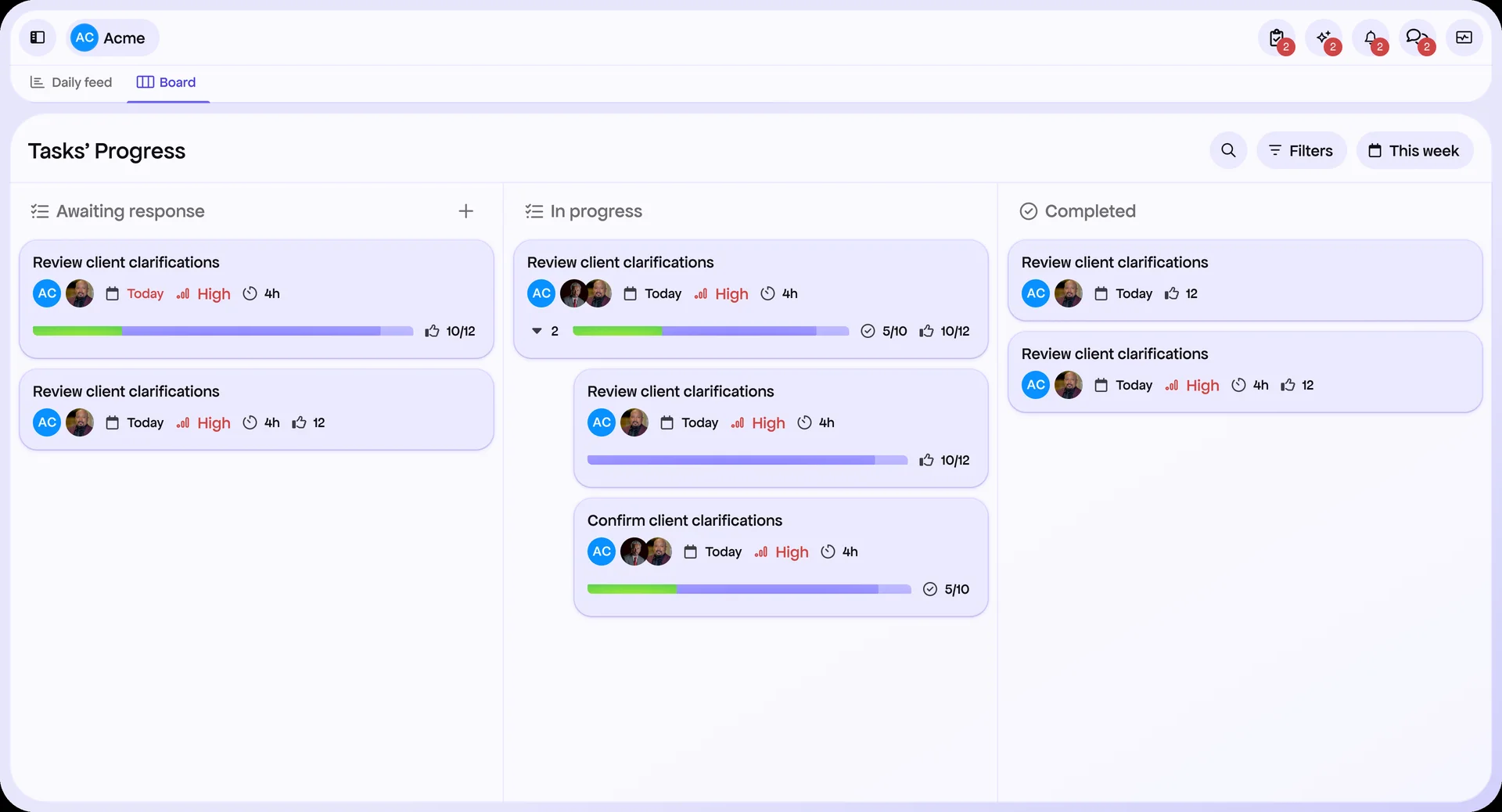
The board tracks the same tasks as flow. Under both views runs the part you cannot screenshot: an AWS Lambda service over a Neo4j graph, with intent-based routing and strict multi-tenant scoping. And because accounting work repeats every month, recurrence is the heart of the module: a scheduling engine with multi-day recurrence, cycle resolution, and unit-tested date logic where every ugly edge case (stale cycle backfill, end conditions, past-dated instances) got a fix and a test.
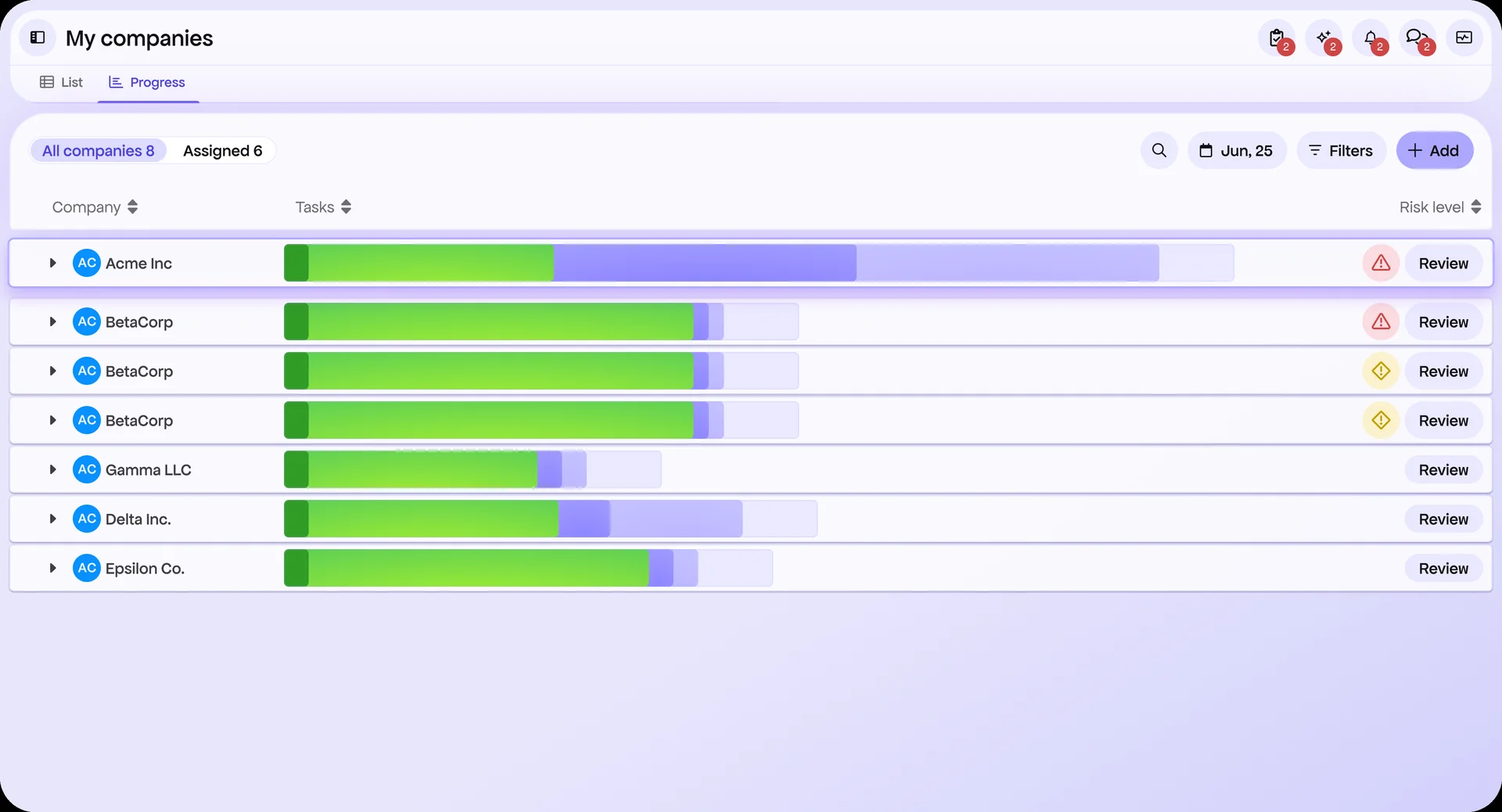
The firm view is the multi-tenant architecture made visible: cross-company queries so a firm sees every client's close in one screen, and background workers computing the risk score that decides which company needs attention first.
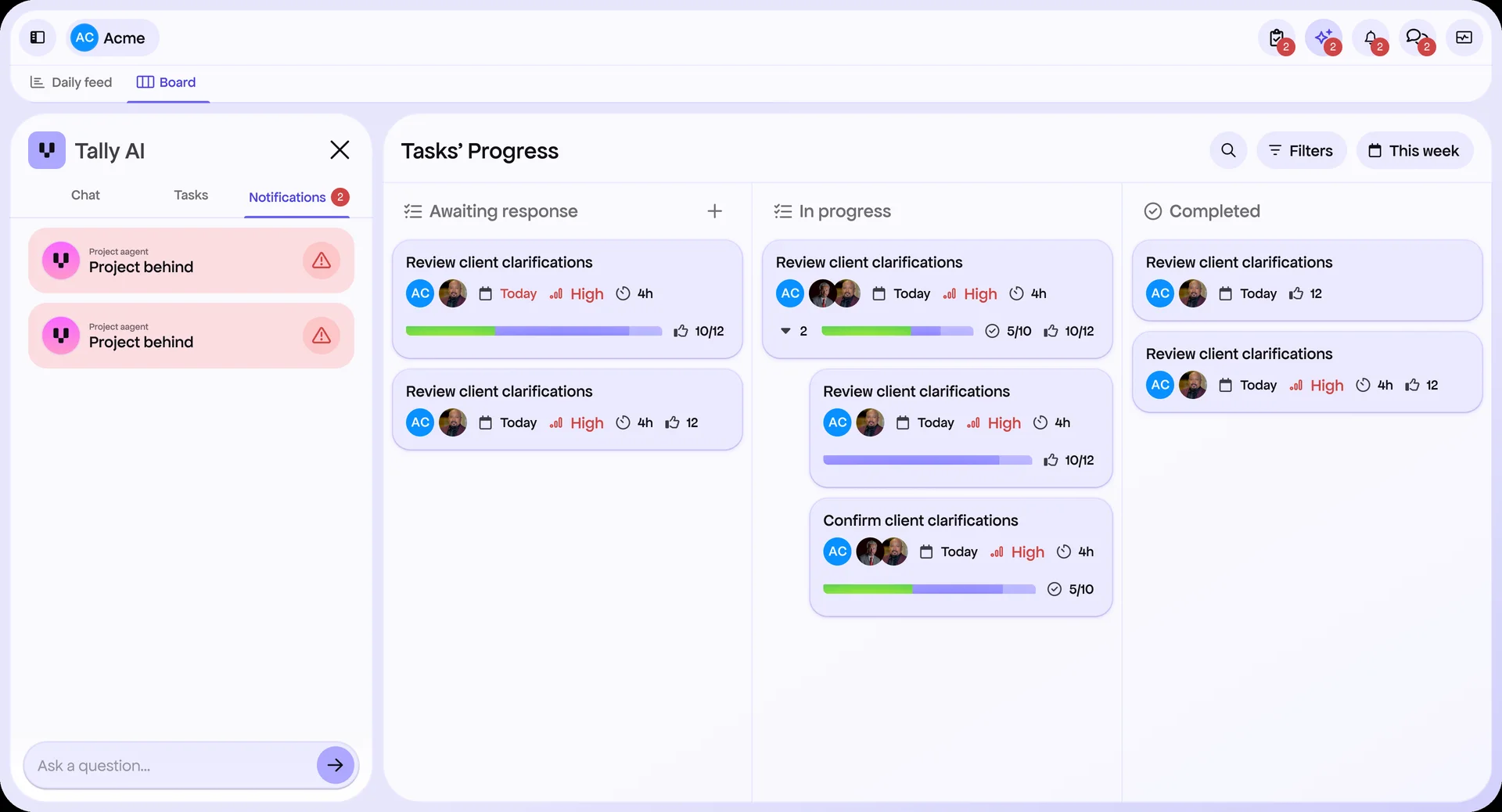
Tally is the module's AI assistant. I designed and built the full experience: streaming chat, contextual suggested actions, notifications like the project-behind alerts above, and a PM context provider, wired to a mock service layer staged for LLM integration.
Around the module, two more pieces: a bug reporter rebuilt as sole author (element selector included; screenshots moved out of the JSON payload, about 1.3 MB down to 127 KB per report by design), and a design system extracted from the platform's strongest surface into a reusable spec (tokens, elevation scale, container patterns, twelve heuristics) that the whole PM module and client portal were re-skinned onto.
How it was built
The working method mattered as much as the output. The module entered the codebase whole: its first commit carried 130 files, an architecture assembled and validated before touching the product's hot path. From there, every feature started as a spec chain (requirements, then an executable handoff, then the prompt that ran it), meetings were mined into documents that agents and people could both read, and the repo carried guardrails: agent rules, pre-push hooks, tests as the deploy gate.
It is the same practice I later described in The Compounding Workspace: wire the terrain first, let every capability make the next one cheaper. Talisman was where a lot of that practice hardened.
Outcome
The module shipped and became part of the product's navigation at both firm and company level. The contract ended when the company's funding round did not close in time, which is the honest ending of many good startup stories.
What remains: a production module built end to end, from graph queries to glassmorphism, in three months.