There is a particular kind of fatigue that comes from years of translating yourself into smaller containers. Not suppression exactly, but a constant calibration. The thought arrives whole and you break it into pieces that can be handed over one at a time. You learn to speak in sequences that others can follow, even when the original pattern was not sequential at all.
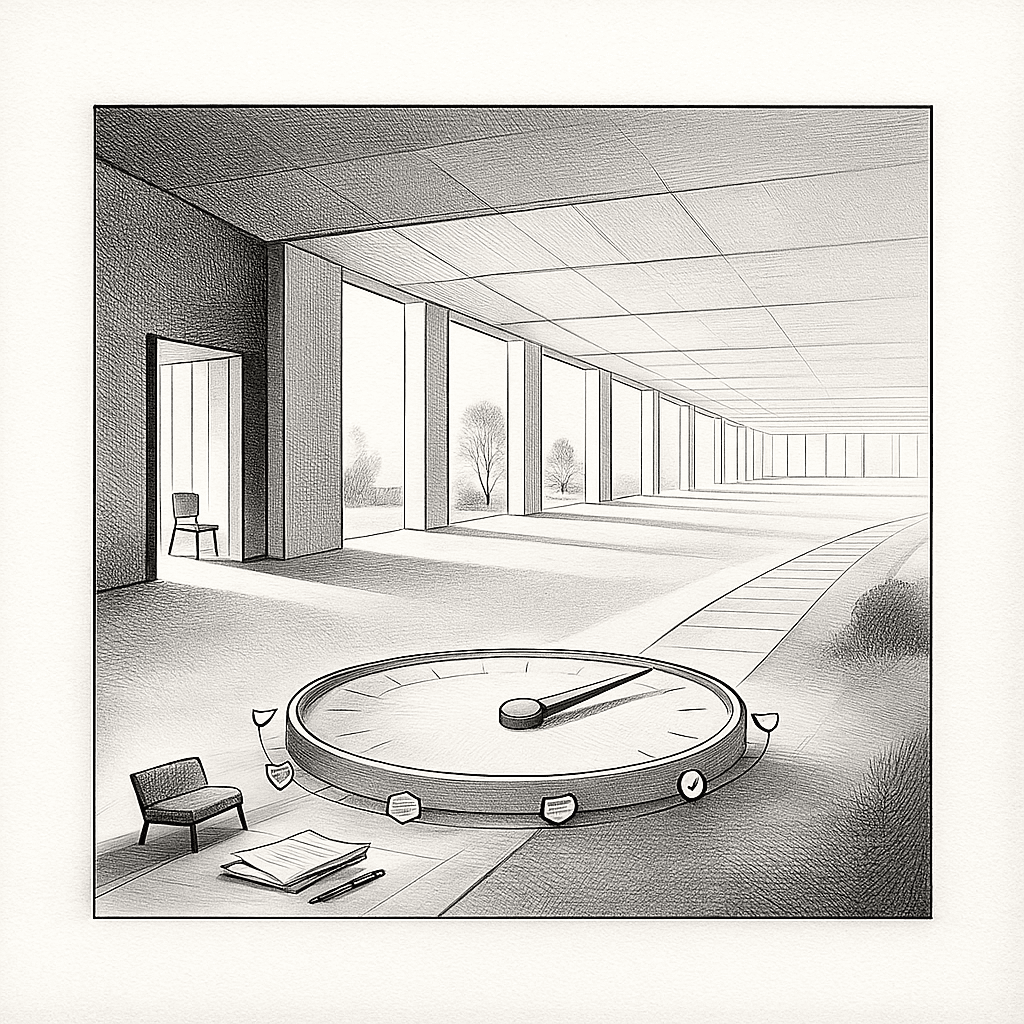
Then something changes. The infrastructure around you grows sophisticated enough to receive what you actually meant. An AI system holds the complexity without asking you to flatten it first. And for a moment there is relief, and then a stranger feeling. The room is larger now. You are not sure who you are in a room this size.
Character does not reveal itself gradually under these conditions. It arrives all at once, like a photograph developing too fast. The parts of yourself you had time to arrange when thinking moved slower now appear without warning. Generosity and impatience. Precision and carelessness. The self you were curating and the self you were hiding both show up to the same meeting.
This is not a problem to solve. It is a territory to learn. The expansion of cognitive capacity is also an expansion of responsibility for what that capacity touches. A mind that can reach further can also damage further. The old constraints were not only limitations. They were also a kind of protection, for yourself and for others.
Narrative is the thread that suffers most obviously. A life makes sense when experiences connect. When augmentation allows you to move between contexts faster than memory can stitch them together, the thread loosens. You wake up one day with a collection of impressive outputs and no story that holds them. Productivity without meaning. Reach without roots.
The remedy is not to slow down but to build differently. Architecture becomes essential. Not rigid structure but living scaffolding. Ways to return to what matters after the mind has traveled far. The machine can extend cognition but someone still has to decide what the cognition is for.
The body presents a quieter problem. It does not protest loudly when left behind. It simply becomes less familiar. Feelings that once had time to settle into awareness get processed externally before they fully arrive. The knot in the stomach, the tightness in the chest, the heaviness that has no name. These used to be teachers. Now they are routed through language and returned as insights, clean and labeled, before they have finished speaking in their own tongue.
What is lost is not intelligence. It is a kind of weight. The capacity to stay with something that resists understanding. To let confusion remain confusion until it is ready to become something else. This cannot be automated. It must be practiced in the old way, alone, without assistance.
So the question is not whether to accept the larger room. The room is already larger. The question is how to live in it without becoming thin. How to let the extended mind reach while the creature at the center stays dense with experience. How to remain someone who can be found, by yourself and by others, even as your capacities grow less recognizable.
The answer is not a method. It is attention. Noticing when the container is doing the holding that you should be doing yourself. Noticing when reach has outpaced presence. Noticing, over and over, that the point of expansion was never expansion. It was to become more capable of something that matters. And mattering still happens in the body, in the slow accumulation of experience that no system can metabolize on your behalf.
The room is larger now. You can fill it or you can inhabit it. These are not the same thing.