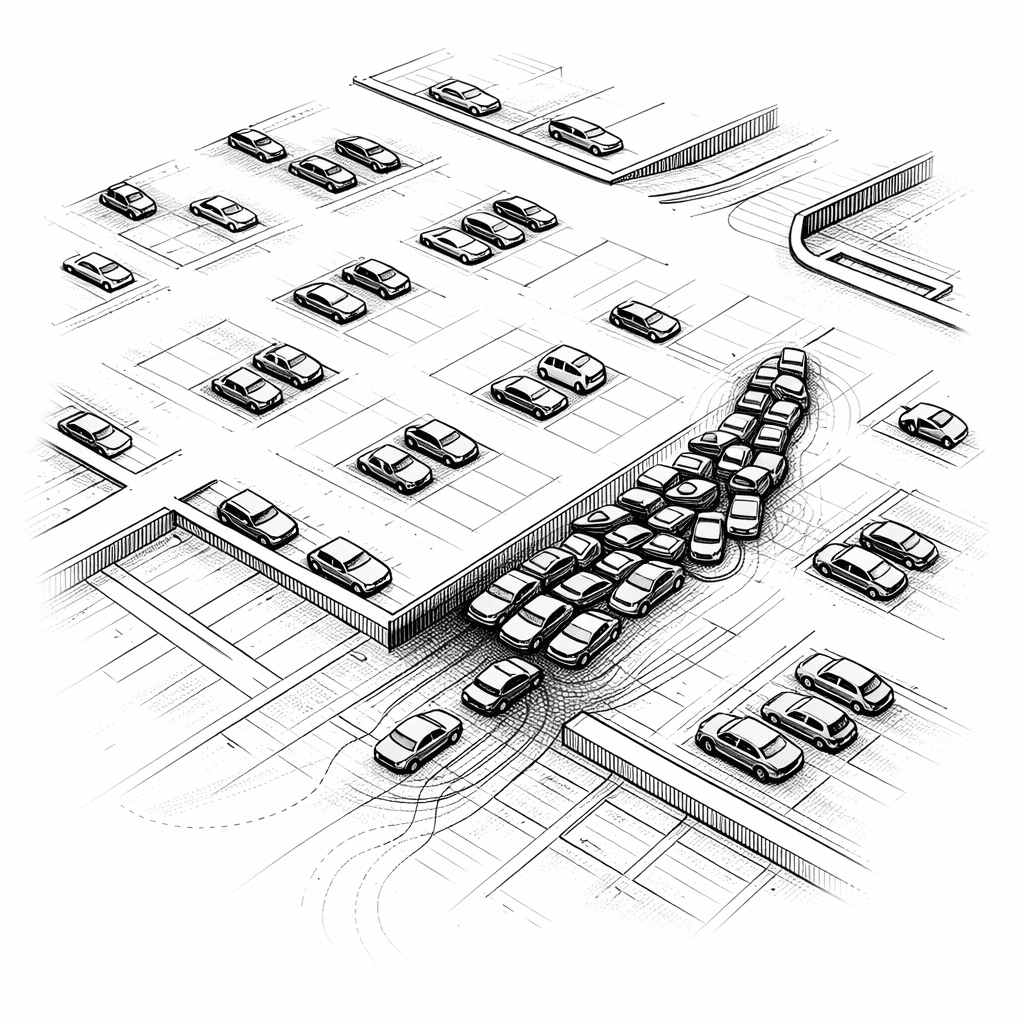
Construí un simulador de flujo para analizar estacionamientos como sistemas dinámicos, no solo como una suma estática de cajones.
El punto no era hacer otro dashboard bonito. Era crear una herramienta que permitiera probar escenarios con rapidez: demanda, capacidad, duración de estancia, entradas, salidas, filas, cuellos de botella y variación real.
Contexto
La experiencia viene de un problema concreto en Monterrey: el flujo de estacionamiento en Pabellón M.
En operación normal, el estacionamiento casi no se nota. Los coches entran, se estacionan y salen. Pero en eventos de alta demanda, la infraestructura deja de ser invisible. Las filas crecen, las salidas se saturan, los cruces se bloquean y el problema aparece tarde, cuando ya afecta a usuarios, operadores y calles alrededor.
El reto era entender el flujo antes de cambiar obra civil, señalización, operación o procesos de pago.
Problema
Muchas decisiones de estacionamiento se toman con promedios.
"Tenemos suficientes cajones."
"La salida debería aguantar."
"Con dos carriles basta."
El problema es que el flujo real no se comporta como un promedio. Los coches llegan por oleadas, la duración de estancia cambia, los pagos no tardan siempre lo mismo y las salidas se concentran después de eventos, cambios de turno o cierres.
Un estacionamiento puede tener capacidad suficiente y aun así fallar por dinámica de flujo.
Qué construí
Construí un simulador de eventos discretos para probar escenarios de estacionamiento sin depender de software empresarial caro ni de hojas de cálculo demasiado simples.
La herramienta permite configurar:
- Demanda por hora y patrones de llegada.
- Capacidad por niveles y cajones por nivel.
- Duración de estancia.
- Entradas, salidas y tiempos de servicio.
- Número de iteraciones para estimar variación.
- Escenarios comparables para probar cambios de diseño u operación.
El resultado es una lectura práctica del sistema: capacidad, rechazo, tiempo de salida P95, cuello de botella, ocupación promedio, tiempo lleno, fila máxima y throughput.
Lo que muestra la simulación
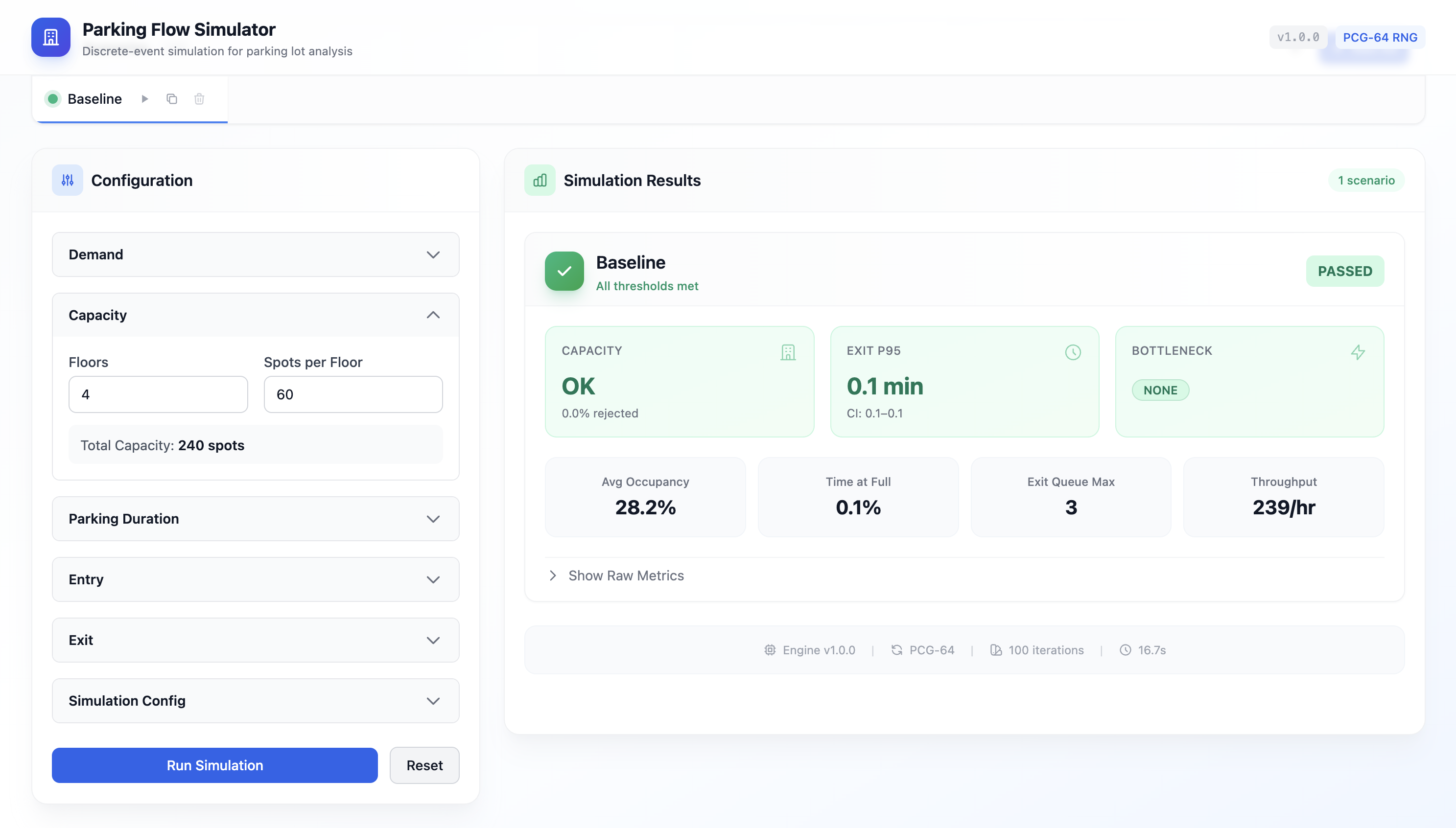
En la corrida de referencia se modela un estacionamiento de 4 niveles con 60 cajones por nivel, para un total de 240 cajones.
La salida del sistema muestra una operación estable bajo esos supuestos:
- Capacidad sin rechazo.
- P95 de salida de 0.1 minutos.
- Sin cuello de botella detectado.
- Ocupación promedio de 28.2%.
- Fila máxima de salida de 3 coches.
- Throughput estimado de 239 coches por hora.
Lo importante no es que este escenario salga bien. Lo importante es que ya no estamos adivinando. Podemos cambiar supuestos, correr escenarios, comparar alternativas y ver dónde se rompe el sistema.
Decisiones que permite tomar
El simulador ayuda a contestar preguntas operativas muy concretas:
- Qué pasa si aumenta la demanda en hora pico.
- Qué pasa si se agrega otro carril de salida.
- Qué pasa si el pago tarda menos.
- Qué pasa si los coches salen concentrados después de un evento.
- Qué pasa si se cambia la capacidad por nivel.
- Qué variable explica mejor el cuello de botella.
La conversación cambia de "yo creo que aguanta" a "bajo estos supuestos, el sistema aguanta o falla aquí".
Enfoque técnico
El motor usa simulación de eventos discretos porque el problema no es estático. Cada coche entra, ocupa capacidad, permanece cierto tiempo y sale. Las filas aparecen cuando la tasa de salida no alcanza a absorber la demanda.
También usa corridas repetibles con semilla para que los resultados se puedan revisar y comparar. Esto importa porque el objetivo no es solo obtener un número, sino tener una base confiable para discutir decisiones.
El diseño de la herramienta sigue tres principios:
- Hacer visible la variación.
- Comparar escenarios sin rehacer todo desde cero.
- Traducir resultados técnicos a señales útiles para operación y diseño.
Por qué es un caso de estudio
Este proyecto representa una forma de trabajo que me interesa mucho: convertir un problema operativo difícil de ver en una herramienta concreta para decidir mejor.
No es solo estacionamiento. Es una categoría de problemas donde la infraestructura funciona hasta que deja de funcionar, y donde el análisis suele llegar tarde porque las herramientas son demasiado caras, demasiado técnicas o demasiado lentas.
Cuando el análisis se vuelve accesible, los equipos pueden probar antes de construir, ajustar antes de saturarse y aprender de cada escenario.
Código abierto
El proyecto está disponible como herramienta open source.
GitHub: https://github.com/rashidazarang/parking-lot-design-simulator
La idea es simple: si más personas pueden modelar infraestructura cotidiana, más decisiones pueden pasar de intuición a evidencia.